The Kitchen Manifest
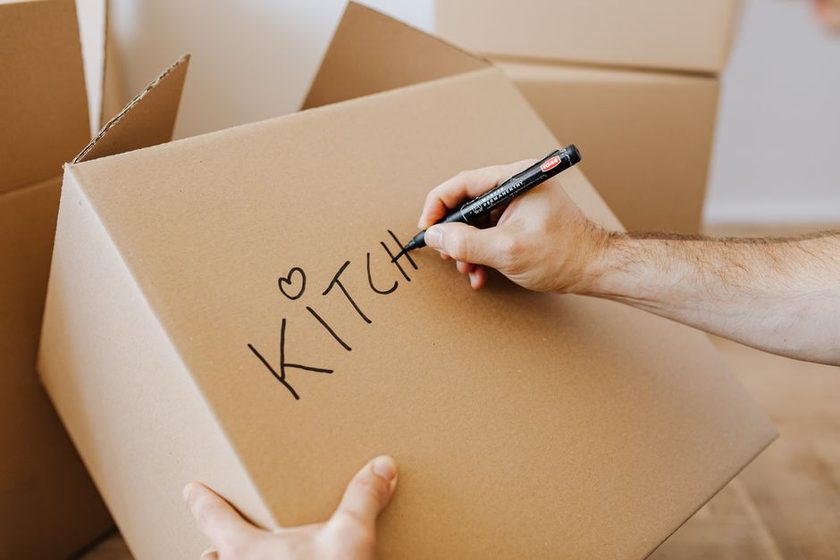
Kitchens generate more small, dense items than any other room in the house, and that fact alone is why they need a manifest rather than a memory. A bedroom empties into a handful of large categories — clothes, linens, a lamp or two. A kitchen empties into hundreds of discrete objects, most weighing under a pound individually, a few heavy enough to break a box if they land on the wrong layer. Treat that room like every other room and you'll produce more boxes, heavier boxes, and a disproportionate share of the breakage on move day. Treat it like freight — grouped by weight and fragility instead of by drawer or shelf — and the same kitchen collapses into a manageable, predictable load.
Why the room defeats normal packing logic
Most packing advice defaults to a location-based method: empty a drawer into a box, empty a cabinet into the next box, move to the next cabinet. That method works fine for a closet, where contents are already sorted by function and roughly uniform in weight. It fails in a kitchen because a single cabinet can hold a cast-iron pan, a stack of napkins, three mixing bowls, and a box of foil — four objects with wildly different densities and fragility profiles that never belonged in the same box, even though they've lived six inches apart for years.
A weight-first approach ignores the drawer entirely and asks a different question of every object: how heavy is it, and how much would it hurt the object below it if dropped on top? Those two answers, not the cabinet of origin, decide the box.
Sorting by weight class, not by use
In practice this means working the kitchen with three or four boxes open at once instead of one. A heavy-goods box collects cast iron, stand mixers, ceramic bakeware, and canned stock — dense enough that the box should never exceed a comfortable carry weight, filling up in volume long before it fills visually. A fragile box collects glassware, stemware, and anything ceramic that isn't built like a brick, wrapped individually and never stacked more than two layers deep. A flat-goods box takes cutting boards, sheet pans, and trivets, packed on edge like records. A soft-goods box absorbs the linens and paper products that weigh almost nothing and can be used as void fill for everything else.
The gain isn't cosmetic. A box built for consistent density loads the truck predictably — it sits where a box of its weight class is supposed to sit, and nobody discovers on move day that the box marked "kitchen" actually holds cookbooks under napkins, sagging the bottom seam.
The cabinet was never the unit of measure. The box was always supposed to hold one weight class, not one address.
The fragility layer sits on top of weight, not instead of it
Weight class gets an object into the right box; fragility decides where inside that box it sits. A dense, unbreakable item — a skillet, a stack of canned goods — goes on the bottom and functions as ballast. A fragile item never goes under anything heavier than itself, which sounds obvious stated plainly but is exactly the rule location-based packing violates constantly, because a shelf's top-to-bottom order in the cabinet has nothing to do with a box's safe stacking order. Kitchens concentrate more fragile, dense, worthless-if-crushed items per square foot than any other room — see a full stacking order for fragile loads for the layer-by-layer version of this logic.
A quick field test
Before sealing a kitchen box, lift it one-handed for two seconds. If the motion feels like a strain rather than a lift, the box is mixing weight classes and needs to be split before it goes anywhere near a stack.
What a kitchen manifest actually records
A manifest, here, isn't a poetic word for a list — it's a short table that travels with the load and tells whoever's stacking the truck what's inside without opening a single box. For a kitchen, five box classes cover nearly every situation:
| Box class | Typical contents | Stack position | Handling note |
|---|---|---|---|
| Heavy goods | Cast iron, canned stock, small appliances | Floor, against the wall | Never top-stacked over fragile |
| Fragile | Glassware, stemware, thin ceramic | Upper third, wedged not stacked | Two layers max, cushioned each side |
| Flat goods | Cutting boards, sheet pans, trivets | Any tier, on edge | Packs like records — minimal void |
| Soft goods | Linens, mitts, paper products | Anywhere, as void fill | Use to brace fragile boxes |
| Open-first | Coffee, kettle, one plate/mug set | Last loaded, first unloaded | Keep separate from every other class |
That last row matters more than it looks. Every kitchen packs one small box last on purpose — a mug, a kettle, enough coffee for the first morning in the new place — and the manifest's discipline is what keeps that box from getting buried under six boxes of canned goods by load time. It's the domestic version of what a shipping crew calls the last-box problem: the thing you need first is almost always the thing loaded last, and a manifest is the reliable way to guarantee that order survives a full truck.
Labeling that a mover can act on without asking
A box labeled "kitchen" tells a mover nothing about handling. A box labeled with its weight class and stack position tells them exactly what to do with it in the three seconds they have to decide — the kitchen is where that discipline earns its keep fastest, since it's the room with the widest spread between the lightest and heaviest items under one roof.
- Mark weight class on two adjacent sides, not just the top — the top is rarely visible once boxes are stacked.
- Mark fragile boxes with a stack position, not just the word "fragile," which doesn't say whether it can sit under something or not.
- Give the open-first box its own color or marker so it never disappears into the general pile.
None of this requires special equipment. It requires deciding, before the first drawer is opened, that the box is the unit that matters — not the cabinet, not the room, not the hour a given shelf happened to get emptied. A kitchen sorted by weight and fragility takes roughly the same number of boxes as one sorted by drawer. It just produces far fewer strained backs and far fewer boxes that arrive with something broken inside, undiscovered until the unpacking starts.