The Weight, Not the Room
The habit of packing by room quietly overloads the boxes that matter most on moving day.
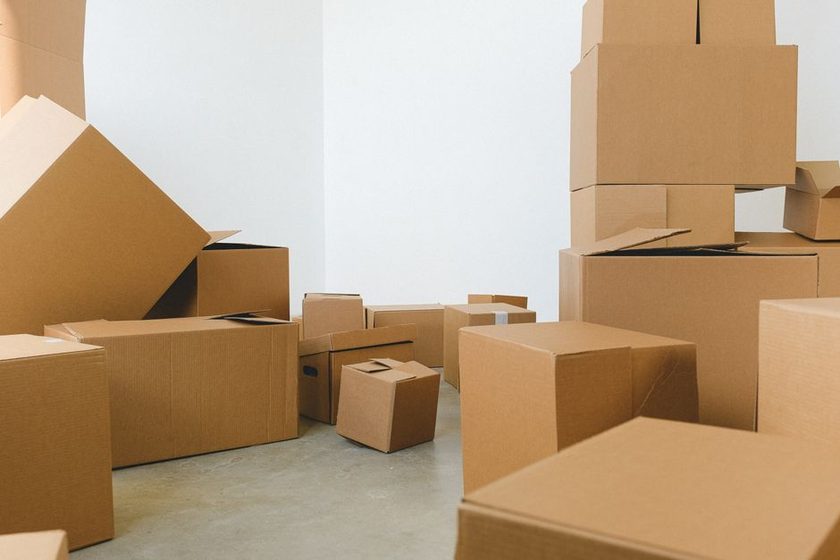
A loader standing at the back of a truck does not care that a box came from the primary bedroom. He cares whether it will crush the box under it, whether it needs two people to carry, and where its mass sits when the ramp tilts. Every household sorts its belongings by room, because rooms are how people remember where things live. Freight does not organize itself by memory. It organizes itself by weight and shape, and the moment a truck starts filling up, the gap between those two systems becomes the day's first problem.
The Room Was Never a Loading Instruction
A room label answers one question well: where did this used to live. It answers almost nothing else. It doesn't say whether the box holds a stand mixer or a stack of dish towels, whether it needs two hands or one, or whether the box underneath it can take the weight resting on top. Two boxes marked "Kitchen" can differ enormously — one packed with cast iron and canned goods, the other with plastic containers and a spare lampshade — and nothing on the outside gives that away until someone tries to lift them.
The habit persists because it maps neatly onto how a house gets emptied. You clear a room, tape a box, write the room's name on the flap, and move to the next room. It's an intuitive system for packing and a weak one for loading, because loading follows a separate set of rules: dense goes low, fragile goes last and on top, and nothing gets stacked past what the box beneath it can bear. None of those rules care what room anything came from.
Every Room Hides All Three Weight Classes
Walk through almost any room in a house and the same mix repeats itself in miniature — heavy, ordinary, and light, sitting inches apart on the same shelf:
- A nightstand shelf of hardcover books sits beside folded linens and an empty lampshade.
- A kitchen drawer of cast-iron pans borders a cabinet of mixing bowls that weigh almost nothing.
- A home office box of file folders sits next to a stack of picture frames that could crack under either one.
- A garage shelf lines up hand tools next to a row of empty planters.
Pack any of those rooms in sequence and the boxes come out looking identical while carrying entirely different loads. This is really a question of density more than size — a box the same dimensions as its neighbor can outweigh it by a wide margin, a distinction we get into further in Density Per Box, Explained. A stack of boxes all marked "Bedroom" might include one a single person carries one-handed and another that needs a dolly, and the label gave no warning either way.
Where the Habit Breaks Down on Truck Day
On moving day, the room label stops being a memory aid and starts being read as an instruction — and it's the wrong one. A loader scanning a stack of boxes for what to put down first has no way to tell, from a room name alone, which one can safely sit at the bottom of a column and which one will buckle.
A box labeled "Kitchen" tells a loader what room it came from. A box labeled "Heavy" tells a loader what to do with it.
The practical result shows up fast: a light box gets set down first because it happened to come off the truck first, then a dense one lands on top of it and the lighter box gives. Or the opposite happens — loaders start hefting every box by hand to guess its weight before deciding where it goes, which turns a fast, rhythmic process into a slow one, box by box, with the truck idling in the driveway the whole time.
Sorting by Weight Class Instead of Room
The fix isn't a more detailed room label. It's a different sorting axis altogether: assign each box to a weight class first, independent of which room it came from, and let the room name become secondary information written underneath. A box can hold books from three different rooms and still be exactly what a loader needs it to be, as long as it's marked for what it actually weighs.
Callout — The One-Hand Test
If you can carry a taped box comfortably in one hand for the length of a hallway, call it light. If it takes both hands and a shift of stance, call it medium. If it takes two people, or a pause halfway across the room, call it heavy. Anything that shifts or rattles when you tilt it gets marked fragile, regardless of what else is true about it.
Once the class is assigned, the room name still has a place — it just moves to a secondary line, useful for unpacking rather than loading. And once a box carries a weight class instead of only a room name, the label itself starts working as real cargo information, which is the approach we lay out in more detail in Labeling Like a Manifest, Not a Guess.
| Weight Class | What Tends to Land Here | Where It Goes in the Truck | Handling Note |
|---|---|---|---|
| Heavy | Books, tools, cookware, pantry goods | Floor, against the front wall | Built first; not stacked past waist height |
| Medium | Small appliances, folded clothing, mixed office supplies | Middle tier, above the heavy layer | Safe to stack two or three deep |
| Light | Linens, pillows, lampshades, empty containers | Gaps and the top layer | Good for filling space above tighter stacks |
| Fragile | Glassware, framed art, electronics | Last on, first off, never underneath anything | Padded on all sides; carried separately when possible |
What Changes When Weight Leads the Sort
When weight class leads and room name follows, the floor of the truck stays level from the first box to the last, because the loaders aren't guessing — they're reading. There's less last-minute reshuffling near the ramp, fewer boxes opened mid-move to check what's actually inside, and less damage from a heavy box settling onto something that couldn't hold it. On the other end, unloading tends to mirror loading, so the boxes that come off first are usually the ones that were built to sit on the bottom — which, conveniently, are often the ones that need to be set down and dealt with before anything lighter gets stacked around them.
None of this asks a household to stop thinking in rooms. It only asks the room name to step back from the front of the label and let the weight class lead. The room still tells you where a box used to live, and eventually where its contents will live again — it just isn't the piece of information a loader needs first.
A note on this system: weight classes describe a sorting habit used by people who load trucks for a living, not a fixed formula. What reads as medium in one household may read as heavy in another, depending on what's actually inside a box and who's doing the lifting. Treat the classes above as a starting vocabulary for your own sorting, not a rule that applies box for box.
Read also
- Cargo Logic for Closets — why closets pack better when you think in stacking order instead of hanging space.
- A Stacking Order for Fragile Loads — fragile doesn't mean light, and light doesn't mean it goes on top.
- Reading the Truck Bed Before You Load It — the floor of a moving truck is a diagram, if you read it before the first box goes in.