The Last-Box Problem
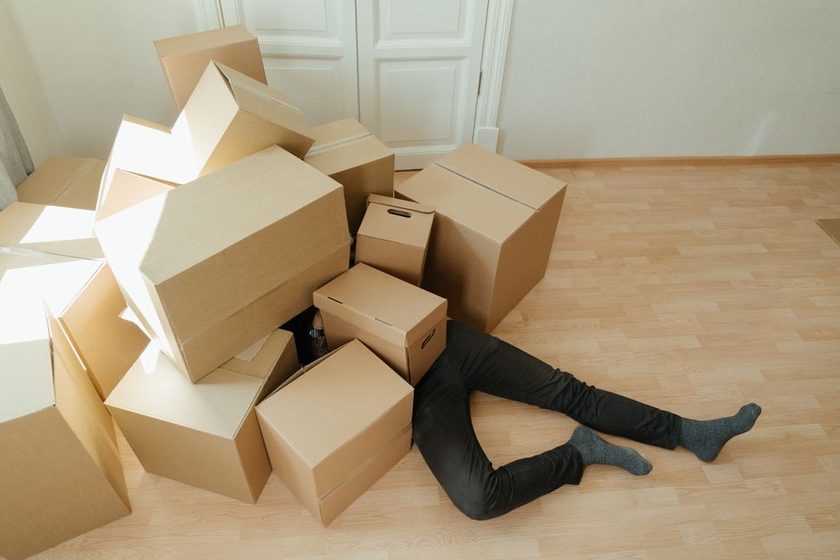
Every move ends the same way: one box left on the floor after everything else has already been carried down. It never has a category of its own — it's the phone charger, the coffee mug still warm from that morning, the roll of tape nobody thought to use, the folder of paperwork someone grabbed off the counter on the way out. Crews call it different things depending on the job, but the shape of the problem is identical everywhere. The last box packed is, by definition, the box built out of leftovers — and it's also, almost without exception, the first box anyone reaches for once the truck is empty and the new place goes quiet.
The Box That Loads Last, Opens First
Freight has a name for this exact contradiction: last on, first off. Whatever gets loaded closest to the door of a container is, by geometry, the first thing anyone can reach once that door opens again — everything loaded earlier sits buried under everything loaded after it. A home move runs on the same physics whether anyone intends it to or not. The box packed at the very end of the day, after the furniture is gone and the rooms are bare, is also the box sitting on top of the stack: nearest the truck's rear door, nearest the new front door, nearest whoever opens it first. The scheduling problem and the loading problem are the same problem wearing two names.
Why Every Move Produces One
No one plans this box. It assembles itself over the final hour, one item at a time, out of everything too useful to seal away early and too small to justify a category of its own. A charger left plugged in because the laptop was still being used. A toothbrush left standing in a cup because someone was still brushing their teeth that morning. A tape gun, a roll of trash bags, a stray screwdriver from taking down the last shelf bracket. None of it belongs together by any packing logic except timing — it's simply what was still in use when the clock ran out. That's not a failure of planning. It's what happens at the tail end of any load, freight or household: the last hour always produces a pile of loose, still-needed items that never got a box of their own.
The Freight Answer: Load It Last, Stage It First
A loading dock doesn't leave that problem to chance. Whatever gets packed last — the tools, the paperwork, the gear a crew needs again before the next stop — gets staged separately and loaded last on purpose, so it rides nearest the door instead of buried under hours of earlier cargo. The mistake most moves make is treating the last box exactly like the ninety boxes before it: taping it shut and handing it off to whoever has room left on the truck. Once it's stacked under a dresser or wedged behind a mattress, its load position is gone, and so is the entire advantage of it being last. A Stacking Order for Fragile Loads covers the same principle from the opposite angle — what rides on top, and why — and the last box earns that same top position for a different reason: not fragility, but urgency.
The last box isn't leftover cargo. It's the only box whose entire job is to be found again in under five minutes.
What Actually Belongs Inside
The honest version of this box is smaller and more boring than most people expect. It isn't a catch-all for anything that lost its home — it's a short, deliberate list built around one question: what does the first hour in the new place actually require? Everything else, however useful it feels in the moment, belongs in a labeled box with the rest of its category, not in the one bag riding shotgun.
| Item | Why It Rides Last | Skip It If… |
|---|---|---|
| Phone chargers & cables | The first hour runs on a charged phone | Never skip |
| Bedding for one night | Beds rarely get assembled the same day | Staying elsewhere the first night |
| Basic toiletries | The bathroom is unpacked last, used first | Never skip |
| Box cutter & basic tools | Every other box has to be opened somehow | Never skip |
| One change of clothes | Moving-day clothes rarely survive moving day | Driving straight home to change |
The Mistake: Packing It By Room
The most common way this box goes wrong isn't neglect — it's habit. Most people pack by room straight through to the end, which means the last box gets filled with whatever was left in the last room they cleaned, usually a kitchen or a bedroom closet, rather than with what's actually needed first. The Weight, Not the Room makes the broader case against room-based packing, and the last box is where that habit does the most visible damage: it turns a box that should be built around urgency into a box built around geography, and the two rarely line up. A kitchen-driven last box is heavy on cookware and light on chargers. A bedroom-driven one has clothes but no tools. Neither one answers the question that actually matters on arrival.
Field Note
A dock supervisor doesn't ask which aisle a pallet came from before deciding where it rides on the truck. The question is always the same — what does the receiving end need first — and the last box deserves the identical question, independent of which room it happened to be filled in.
Staging It So It's Actually First
Getting the contents right solves half the problem. The other half is keeping that box out of the stack entirely.
- Build it over the last hour, not the last five minutes — start a running pile before the final room is even empty.
- Use one box, not a scatter of tote bags — anything split across three containers stops being a "last box" at all.
- Mark it in a way nothing else on the truck looks like — a different tape color, or a word instead of a room name.
- Load it last and keep it off the stack — under a seat, in a car, anywhere but wedged beneath other cargo.
- Carry it in personally rather than handing it off to the general unload.
None of these steps require extra time on moving day — they only require treating the last box as a decision made in advance, rather than a scramble handled in the truck's open door. The box that loads last has one job, and geometry already put it in the right position to do it. The only thing left is not undoing that by chance.
Read Also
- Density Per Box, ExplainedTwo boxes that look the same size can carry a completely different load — the same math decides what the last box can hold.
- Reading the Truck Bed Before You Load ItThe base layer of any load sets the terms for everything stacked after it, last box included.
- Labeling Like a Manifest, Not a GuessA box that has to be found in five minutes only works if its label says more than the room it came from.